Tuesday, April 16, 2013


The Tortoise and the Snail

A Morally Instructive Tale of Romance, Suspense and Inter-species Competition

Once upon a time a snail and a tortoise met in a forest and started to argue about who was faster.
“I’m faster than you,” said the tortoise.
“I’m faster than you,” said the snail.
And so they decided to have a race.


All the animals in the forest came out to watch: the rabbits and the chipmunks, the squirrels and the field mice. Even a hedgehog came out of hibernation early so that he could set up a concession stand selling slugs. His name was Bernard Tiggiewinkle and I don’t think he did much business.


The race course was set up in a small clearing at the top of the forest. The tortoise and the snail were lined up behind the start line. A hare, who was a veteran of many races in the forest, said “Ready... Set... GO!”, and all the animals started shouting “Tortoise! Tortoise! and “Come on Snail!”.

 After a while a little boy bunny said to his mother, “Mommy, why aren’t they moving”, and his mother said “They are moving dear: the tortoise’s front foot just crossed the start line.”


The animals watched and waited.


A little bunny girl said, “Daddy I’m bored.” “Me too,” said her father.

One by one the animals wandered off. The rabbits took their little bunnies to get some carrot gelato as a special treat, and the squirrels went home to watch the season finale of Game Of Nuts which was on cable that evening.


The little bunny boy and the little bunny girl grew up and  left home to go to college. They graduated, fell in love and, after a long (by rabbit standards) courtship lasting almost 15 minutes, they decided to start a bunny family of their own.

One day, some years later, they decided to take their children for a hop in the forest, and happened to come to the part of the forest where the tortoise and the snail had had their race. As they hopped along, they told their children about the day when they were young and their parents took them to see the race. When they came to the clearing they found the grass had grown tall, and the clearing was full of wildflowers. And there, in the middle, were the tortoise and the snail, still neck-and-neck about three feet from the finish line. The little bunny children looked up from their iPhones, said “Yeah, whatever” and went back to sending text messages to their friends.

The morale of this story is, races between snails and tortoises are extremely boring.

Friday, March 22, 2013

Minox film holder for Nikon CoolScan film stanners

For quite a while now, I’ve been fascinated by subminiature cameras, particularly the 8x11 Minox family of cameras. It’s still possible to find films for the Minox, and developing b&w at home is actually much easier than other film cameras. (For colour films, I send them to Blue Moon Camera in Oregon). However, I don’t have anywhere to set up a darkroom at home, so I have to rely on scanning the negatives and printing digitally.

The Minox lenses in recent Minox cameras (late B’s onwards) have a resolution of over 160 lpmm (the earlier Complan lens, using a curved film plane are even higher). This is much higher even the very best 35mm lenses. To get the full benefit of this requires using a very fine grain film and developer. Some people use films like Agfa Copex or Rollei’s ATP with special low-contrast developers to get spectacular results. The main limitation to quality, then, is the ability to make sufficiently high-resolution scans. For this purpose dedicated film scanners such as the Nikon CoolScan family are much better than flat bed scanners.

The difficulty that I’ve found scanning on this scanner was how to hold the film sufficiently flat. It the film is allowed to curl then the scanner, when focused on the center of the frame, will blur the edges.

My first successful film holder was made from two pieces of 2mm thick aluminium sheet with an 8x11mm hole and screws to clamp the film, and fit in the slide adapter of the film scanner. It worked pretty well. Lining up the frame and clamping the film was a little awkward, but could be quite quick with practice.


Recently I decided to try to design a better holder, and this time have it 3d-printed by Shapeways. I decided to use some magnets to apply a small amount of pressure and bought some tiny 3mm magnets on Amazon.
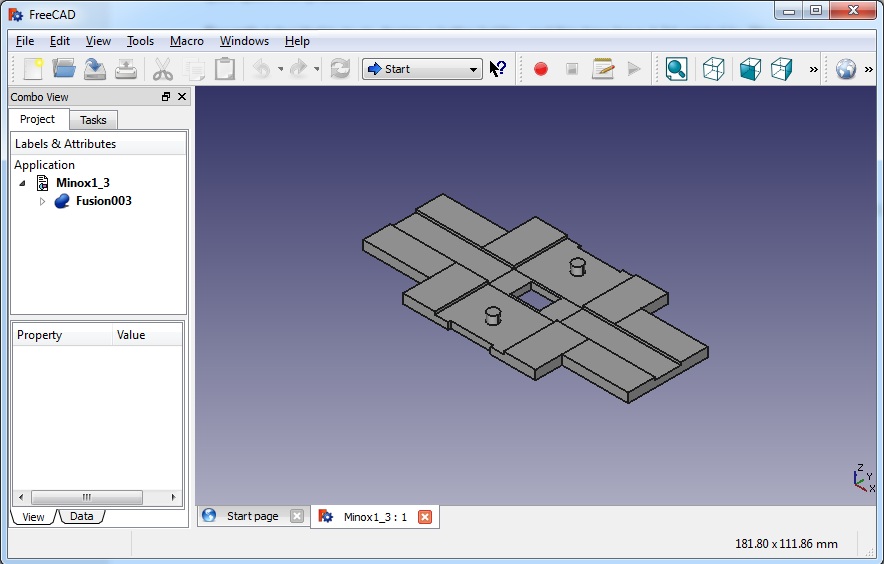
I designed the two parts to fit together using FreeCAD, and very simple open source CAD program.


The top part I make slightly curved to avoid catching on the slide holder mechanism of the scanner but still be stiff enough.

My first attempt at printing used Shapeways' basic plastic in polished finish. The surface came out nice and smooth, but the tolerances weren’t quite good enough, and, specifically the various measurements came out slightly small. So I tried again using their “frosted detail plastic” and making some adjustments. This time the dimensions were closer, but the surface of the plastic was a little rough. I found it could be made nice and smooth easily by using some very fine emory paper.

The minimum wall thickness allowed for this type of plastic is 0.5mm, which means that there’s 1mm of material separating the two magnets on each side. I wasn’t sure if the very tiny magnets would be sufficiently powerful to hold the two pieces together and to flatten film, but so far they seem to work for the films I’ve tried out. It might be necessary to use larger or more magnets for films with a lot of curl.


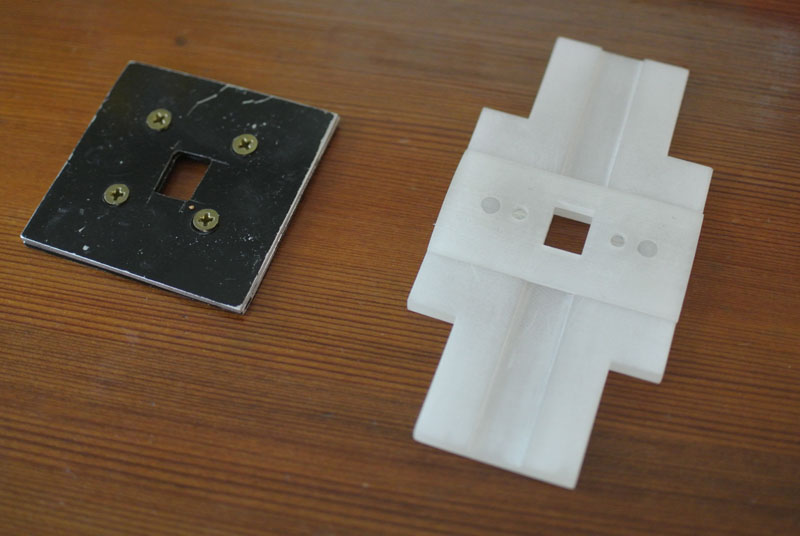
This is the new film holder next to my previous film holder:


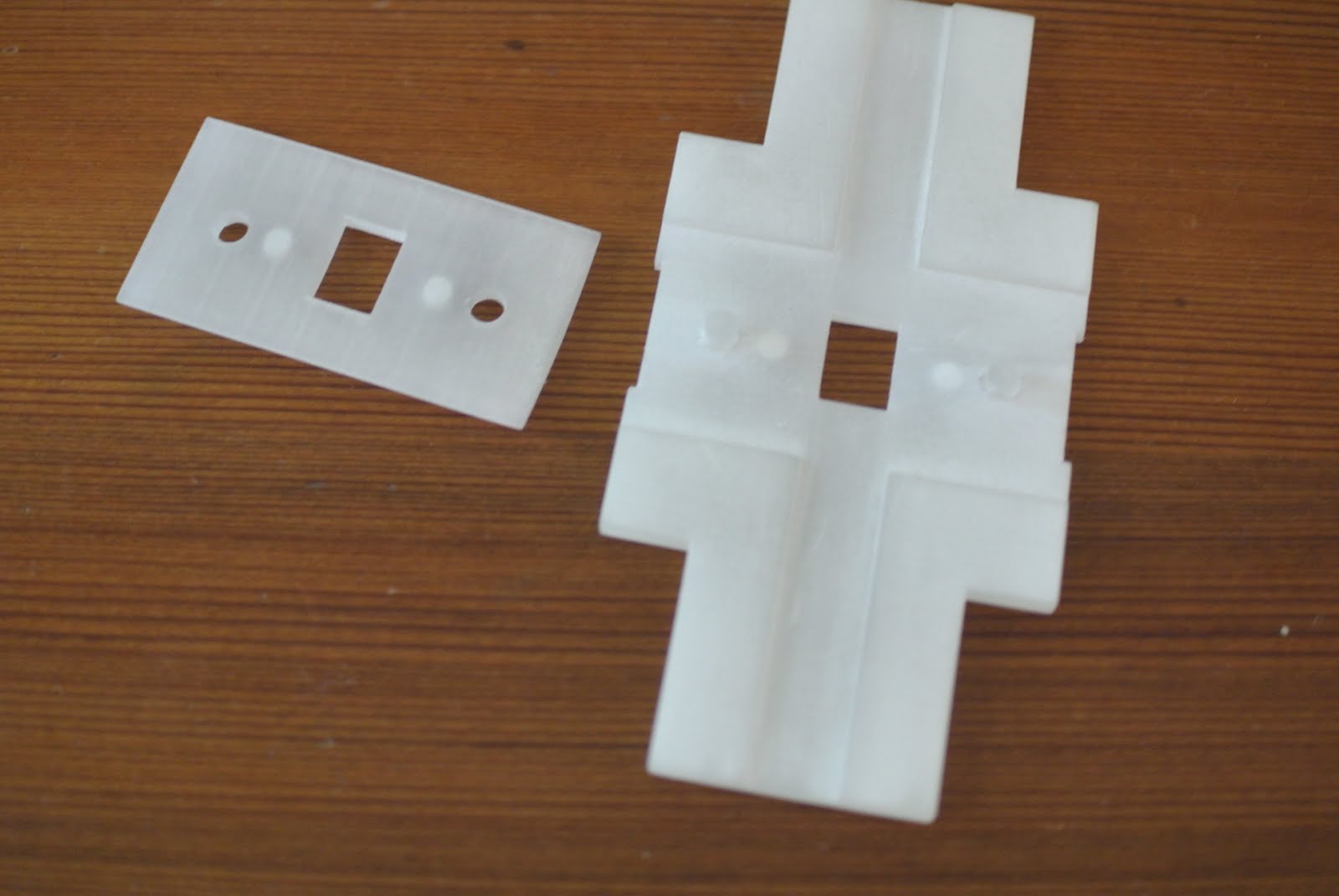
This photo shows the two parts separately:

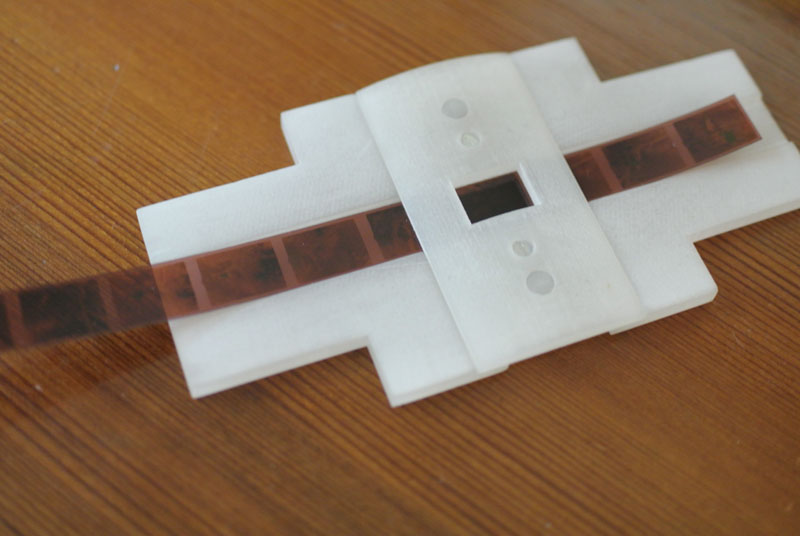
And finally seen here with a film in place:


Saturday, February 23, 2013

Dachshunds


I have been contemplating the problems faced by Dachshunds, and other dogs with similarly low ground clearance, in negotiating tall bumps or other tall obstacles..Specifically it seems reasonable to suppose that, halfway across a bump of sufficient height, a Dachshund would bottom-out, unable to propel itself forward with either its front or hind legs (see Fig 1). Given the popularity of the breed, it is strange then that, when out walking, I don’t frequently see a Dachshund stuck halfway across a bump with all four legs thrashing wildly in the air. Nor, when I see a  Dachshund-owner walking their dog, do I see them having to go back to pick up their flailing dogs and set them down on level ground.

One possible explanation is that Dachshunds have learned to instinctively arch their spines upwards as they go over bumps in  a sort-of inverted limbo dance (see Fig 2). However, while this would help the dogs go over some medium sized bumps, it does not seem an adequate solution overall.
After some thought reached a remarkable conclusion: Dachshunds have evolved the ability to shift their center of gravity by a few inches forward and backwards. They use this ability to see-saw back and forth on the top of a bump, gaining traction first with their hind paws and then with their front paws, in order to pull themselves over (Fig 3).


At first this conclusion might seem surprising, but after considering the problem carefully I'm convinced this must be the case. Nevertheless, I think with would be appropriate to carry out some experiments to verify this theory. I will require the loan of one Dachshund, some thumbtacks and a piece of string.